APFAC 2024 Resource Guide
Here is your complete resource guide for the Australian Paediatric First Aid Conference 2024.

We really don’t want to be the fun police with this one – we promise! 🙈
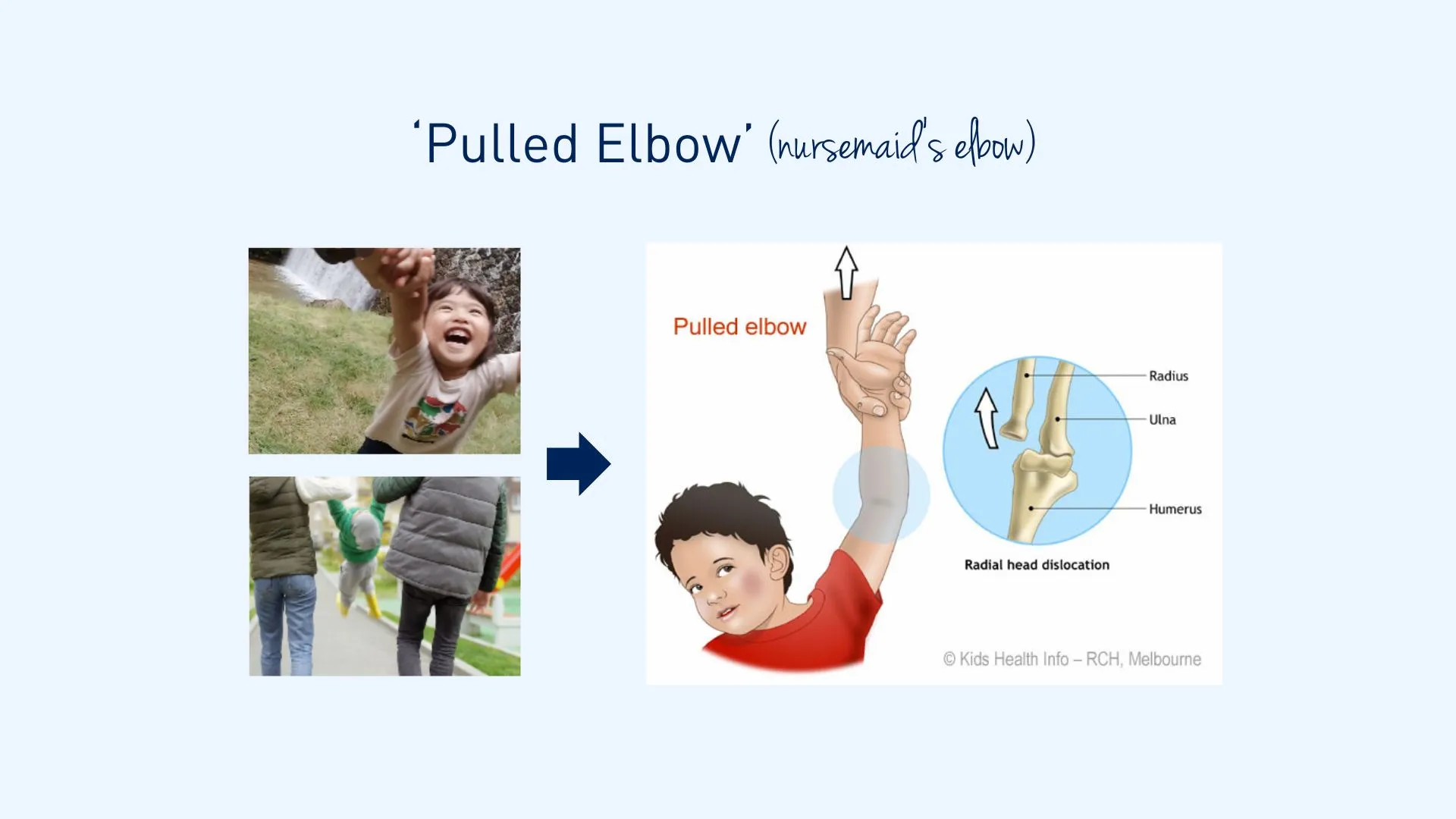
Kids LOVE being swung around by their arms, whether in circles or the classic “one, two, three weeeeeeee” with an adult on either side of them.
Just be aware of ‘pulled elbow’ – a common injury that can come with doing these. You don’t have to stop the fun, just lift them by their armpits instead!

Image credit: RCH Pulled Elbow fact sheet
A pulled elbow is a result of the lower arm (radius bone) becoming partially dislocated (slipping out) of its normal position at the elbow joint. A pulled elbow will not cause any long-term damage to your child.
This common injury is caused by a sudden pull on a child’s lower arm or wrist. It can also happen when a child falls.

In most cases, children with a pulled elbow will cry immediately after the sudden pull, and not use the injured arm at all. Their arm may simply hang by their side.
If you think your child has a pulled elbow, you should seek immediate medical treatment from a GP or at a hospital emergency department.
The longer the elbow has been out of place, the more difficult it may be to put back into place.
The partial dislocation will be reduced (manipulated back into place) by a nurse or doctor.
This may be painful and distressing, but it only lasts a short moment and is over when the radial bone pops back into place.
Never attempt to do this yourself!
Some children are more likely than others to get a pulled elbow.
To prevent a pulled elbow, make sure you don’t pick your child up by the lower arms or wrists – lift them up using their armpits instead.
Reference
Here is your complete resource guide for the Australian Paediatric First Aid Conference 2024.

Breath holding episodes are common in children aged 6 months to 6 years. Although they are frightening to watch, your child is not harmed in any way. Breath-holding spells can happen after your child has had a fright, minor injury, a tantrum or they are upset.

Starting solids can feel exciting and overwhelming. With updated 2026 ASCIA guidelines on introducing allergen foods, many parents are wondering what’s changed and what it means for their baby. This practical, parent-friendly guide explains when to introduce common allergens like peanut and egg, how often to keep offering them, and what to do if you notice a reaction. We break down the latest advice so you can feel more confident introducing solids safely.