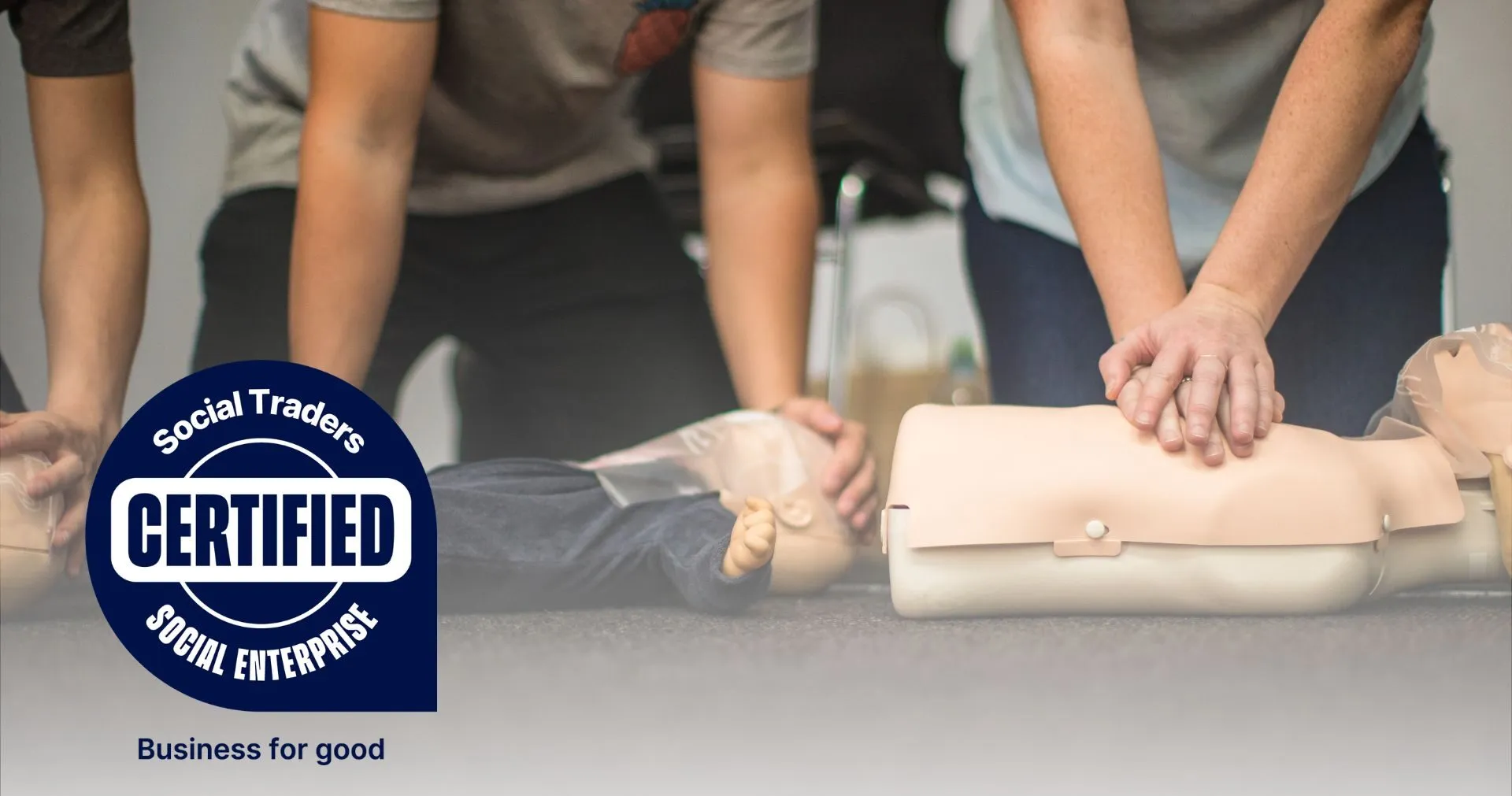
We are thrilled to share the exciting news that CPR Kids is now a certified Social Enterprise.
“Social enterprises are an innovative breed of businesses that exist to create a fairer and more sustainable world.” Social Traders
Social enterprises must do three things:
1. Have a clear goal that helps society, culture, or the environment and benefits the public or community.
2. Make most of their money through business activities.
3. Focus their time and money on their goal, ensuring it helps the public or community more than it helps themselves.
Certified social enterprises use their profits to do good things. They’re open and honest about how they operate and their impact. They also take responsibility for their actions and regularly check in to see how they’re doing.
CPR Kids reinvests into the community by providing free or low-cost paediatric health education to those who would otherwise not be able to access this training.
Let’s dive a little deeper… What does it mean to support a company that is a social enterprise?
Making a Difference: When you support a certified social enterprise, you’re backing a company with a bigger purpose beyond profit. These businesses are dedicated to tackling social or environmental issues.
Clear Mission: Certified social enterprises have a mission statement outlining their goals for creating positive change. This mission guides everything they do, from the products they offer to how they operate their business.
Balancing Profit and Purpose: While making a profit is essential for any business, certified social enterprises prioritise using their profits to further their social or environmental mission.
Transparency and Accountability: Certified social enterprises are transparent about their operations and impact. They openly share information about their practices, supply chains, and financials so customers can make informed decisions. Additionally, they hold themselves accountable by regularly measuring and reporting on their social or environmental performance.
Impactful Products and Practices: Whether it’s through their products, services, or business practices, certified social enterprises actively contribute to positive change. This could involve using sustainable materials, employing fair trade practices, or supporting local communities through partnerships and initiatives.
Community Support and Engagement: Certified social enterprises often meaningfully engage with their communities. They may collaborate with local organisations, host events, or involve customers in their mission to create a sense of belonging and shared purpose.
Joining a Movement: By supporting a certified social enterprise, you’re part of a larger movement of individuals and businesses working together to create a better world. It’s a way to align your purchasing power with your values and contribute to meaningful social and environmental impact.
By supporting a certified social enterprise, you’re not just buying a product or service but helping a cause. It’s a way to positively impact the world around you. So, when you buy from a certified social enterprise, you’re not just getting something you need—you’re making a difference.